

Second Sunday after Epiphany RCL-A Isaiah 49:1-7, 1 Corinthians 1:1-9, John 1:29-42
In Sunday’s gospel, it’s hard to miss the exuberance of John the Baptist and his disciples on seeing Jesus. They called him the Lamb of God, the Son of God and the Messiah.
None of those three titles meant one single thing. All three were susceptible of multiple meanings. Being “anointed” meant that a person, place or thing was set apart for a special purpose. There wasn’t only one “Son of God,” the title wasn’t even always singular1 and it did not necessarily imply deification.2 What did John mean by “Lamb of God?” Good question.3
The titles were not definitions or honorifics. They were an attempt to put into words the feeling — the intuition — that Jesus would lead them towards the Realm of God.
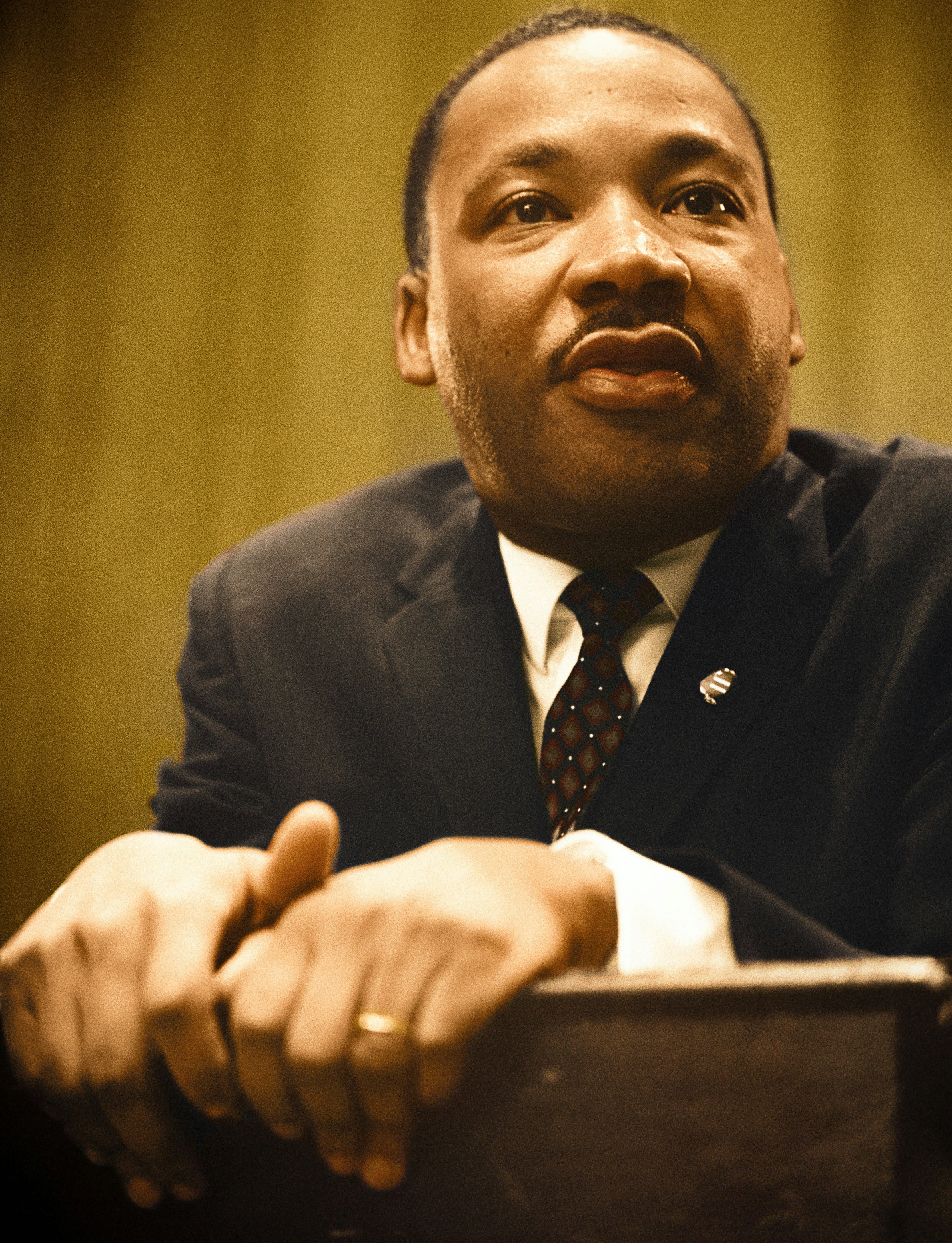
Seventy years ago, some black ministers in Montgomery, Alabama had a feeling like that about a colleague. There had been a one-day bus boycott to protest the harassment and abuse of black passengers on city buses and the arrest of Mrs. Parks. But no one was sure whether the boycott could go longer. A decision had to be made. A rally was scheduled for Monday night, and the ministers’ association did not yet have a leader for a boycott.
Without asking him before hand, the ministers nominated the 26 year old pastor of Dexter Avenue Baptist Church. He had spoken at the local NAACP meeting four months earlier and made a good impression. He had a solid educational resume and he was new in town, so he had a clean slate. But mostly, the people who had worked with him had a feeling — an intuition — that he could provide the leadership they needed.
Despite efforts by the city, the bus company and private actors to shut it down, the boycott lasted 381 days. It was not the work of Dr. King alone. It is estimated that 40,000 people walked, biked or carpooled to work and to stores in every kind of weather rather than ride the buses.4 Taxi drivers reduced their fares to what the bus fare would have been.5 Over 200 people volunteered their cars for a car pool system which had 100 pickup stations in the city.6
There is faith, vision and bravery all around us. We might find it in a friend or a colleague. We might find it in our own souls. If we get the feeling that we have found it or that it has found us, and if it is of God, we will surely hear the invitation to “Come and see.” Because we will not be doing the work alone, and the fullness of the Realm of God is not realized until we all find our place in it.
Peace, and be Good.
Israel was called “Son of God.” (Exodus 4:22, Jeremiah 31:9, Hosea 11:1.)
It could mean that a particular person had a special relationship with God. Mogens Müller, “Son of God” in Metzger, Bruce M. and Michael D. Coogan, The Oxford Companion to the Bible. Oxford University Press, 1993.
Sheep and lambs were part of nearly everyone’s everyday life in the Middle East. They are mentioned in the Bible more than any other animal. And yet, how Jesus was like a lamb was not explained. The author of John’s gospel wanted to readers to see Jesus as a kind of paschal lamb, but Passover lambs were not sin offerings. It’s not clear how a lamb of God would take away sin. Still, the image has inspired some lovely thought and poetry. For example, Ford, David F., The Gospel of John: A Theological Commentary. (Baker Academic, Grand Rapids, MI. 2021) 45-48.
Interesting. As an innocent, non scholar, my instinct has always been that the Jesus story is replicated throughout the centuries and cultures…. MLK, Ghandi, and so many women whose stories we still do not know. If we are open we can know when someone is leading us to a very good place.